On this page
Release 0.18.0
Typed components with real operations in Proschi
For: You write Proschi designs or solve its practice problems, and want step labels the simulation and the tests understand.
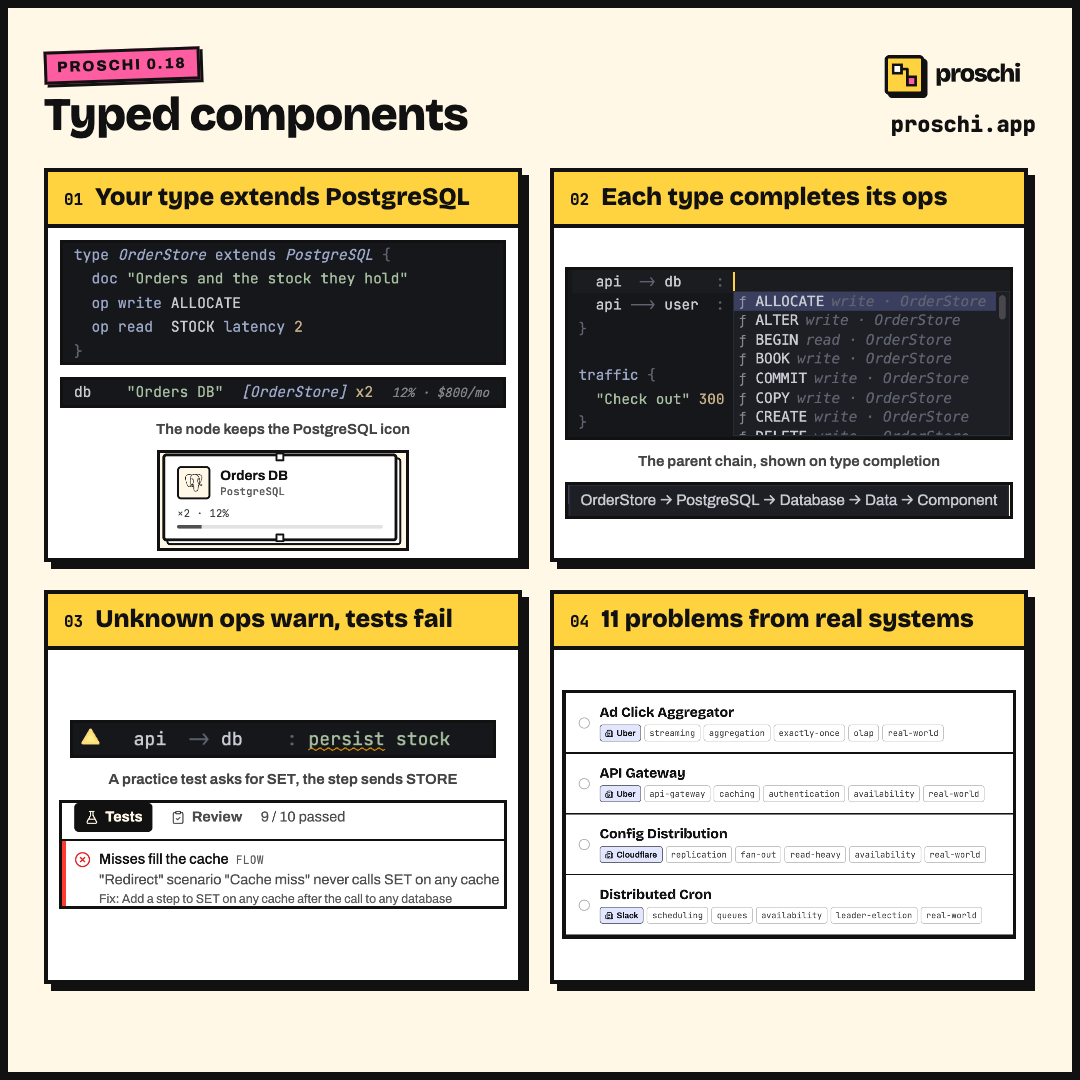
Every tech in a node's brackets is now a type. [PostgreSQL] knows
SELECT and INSERT, [Redis] knows HGETALL and INCR, and a
[REST API] knows its HTTP methods, statuses and headers. You can extend
any of them with type … extends …. This post covers 0.15.1 to 0.18.0.
What shipped #
Types and operations (0.18.0) #
type Name extends Parent { … }declares a type. It inherits its parent's kind, simulation numbers, operations and icon, and can override them.abstract typedeclares one that only exists to be extended.- A built-in type for every catalog tech, written in Proschi itself,
with the operations of the real API:
op read,op write, andop forwardfor gateways that pass a WebSocket frame on.latency 2andcost 3on an op scale that step's time and load. statusandheader. A response such as--> user : 299is checked against the type's statuses. A request can name headers:POST /orders header Idempotency-Key.- Checked steps. A step whose label names no operation of its target's
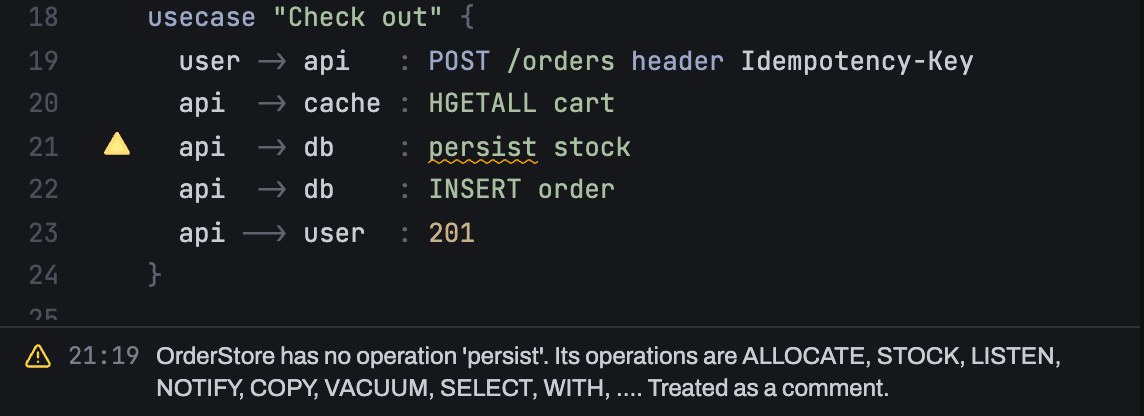
type gets a warning with a did-you-mean, and is treated as a comment.
Types such as
[Service]list no operations, so their labels stay free. - Typed tests:
"Shorten" uses INSERT on db,calls api with GET /{code}andsends header Authorization to api. - Strict practice. All 40 problems now have
strict: true, where an unknown operation is an error, and their tests check operations. - Editor support. The web editor completes operations after the colon and shows a type's parent chain when it completes the type. The language server adds hover, go to definition, references and rename for types.
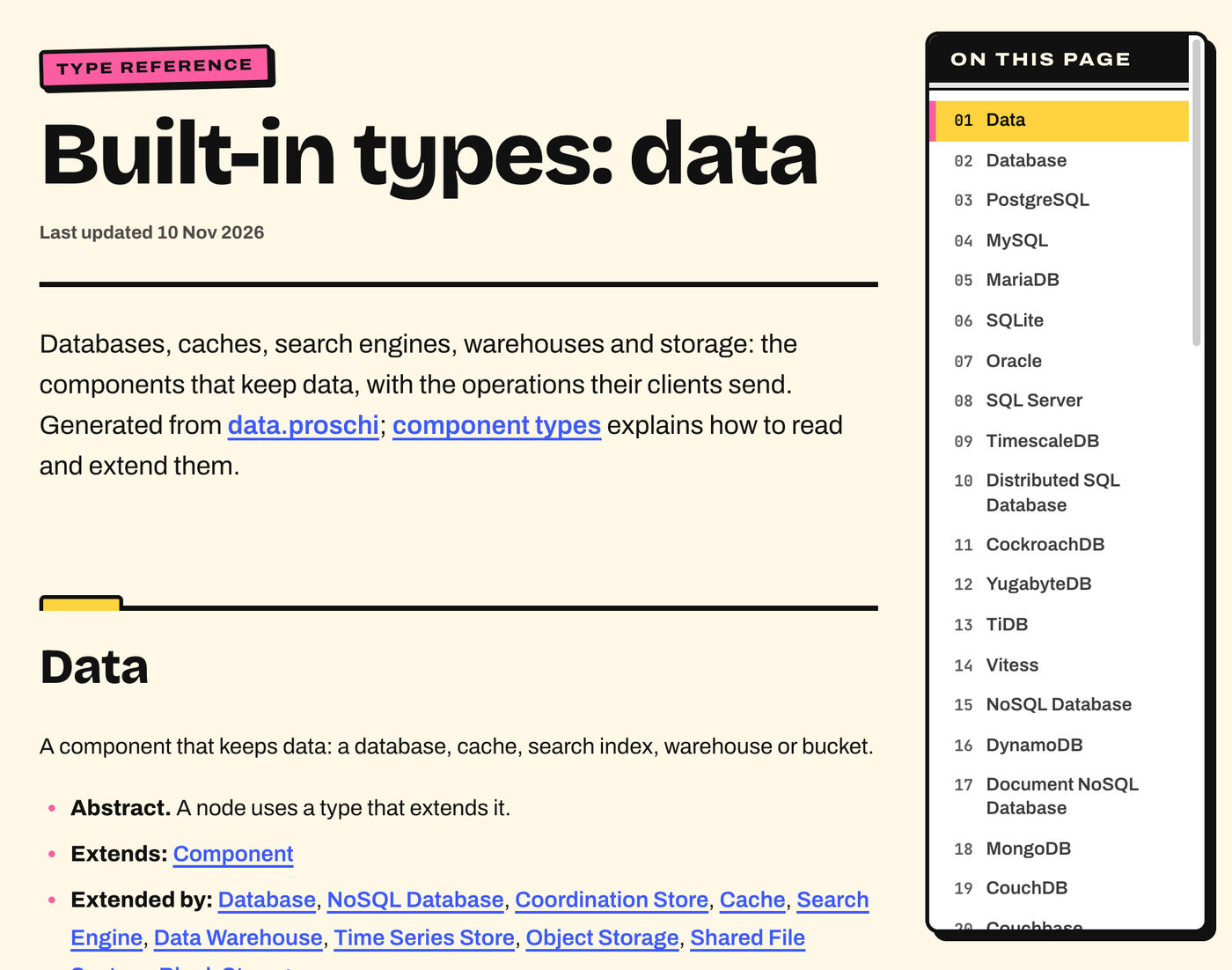
- A reference of every built-in type, starting at Built-in types: data. Each docs page now shows when it was last updated.
Simulation and canvas (0.18.0) #
- New quantities: constants (
let peak = 120k rps, used as$peak), peak traffic ("Read" 20k rps peak x3), a cache hit rate (cache hit 90%), retries (errors 2% retries 3), queue drain andlag, and cost budgets per team, group or tag. - On the canvas: rps and latency chips on each edge, the p99 path in
bold, a ring on bottlenecks, a traffic slider and Simulate down in
the right-click menu. Copy, paste, node search (
/) and a minimap too. proschi diffin the CLI.
Practice (0.16.0 and 0.17.0) #
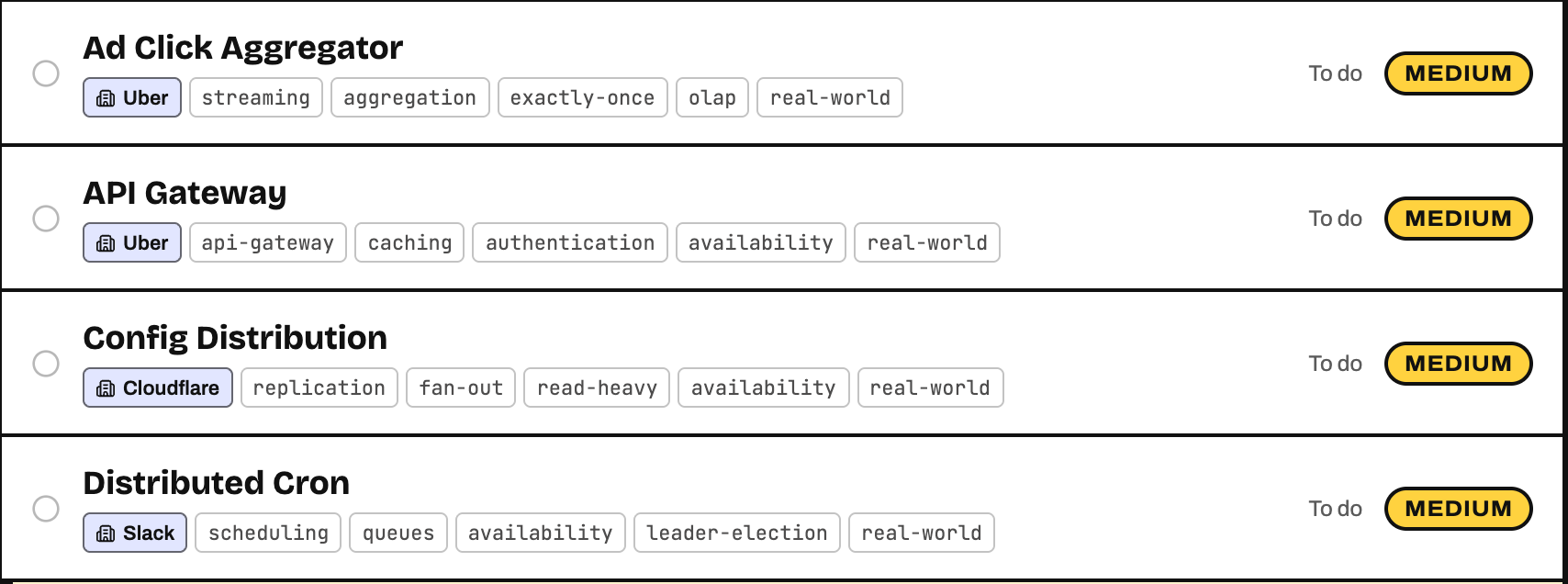
- 11 problems based on company engineering posts, 40 in all: Netflix's load shedding, Uber's ad click aggregator, Cloudflare's config push, Slack's distributed cron and more. Each cites its source.
- A problems-first practice page, sign-up by email, and Send feedback.
Playback (0.15.1) #
A --> written after other steps now plays where you wrote it, and a
par block plays as one frame, a response inside it included.
What problem it solves #
Before, Proschi guessed reads and writes from words in the label. persist stock to a database was a read or a write depending on a verb list, and a
typo went unnoticed. Now the type decides. persist is no operation of
PostgreSQL, so the editor says so at the word:
The same goes for practice. A cache-aside answer that sends STORE where
the test asks for SET fails that test, and the hint names the step to add.
How to use it #
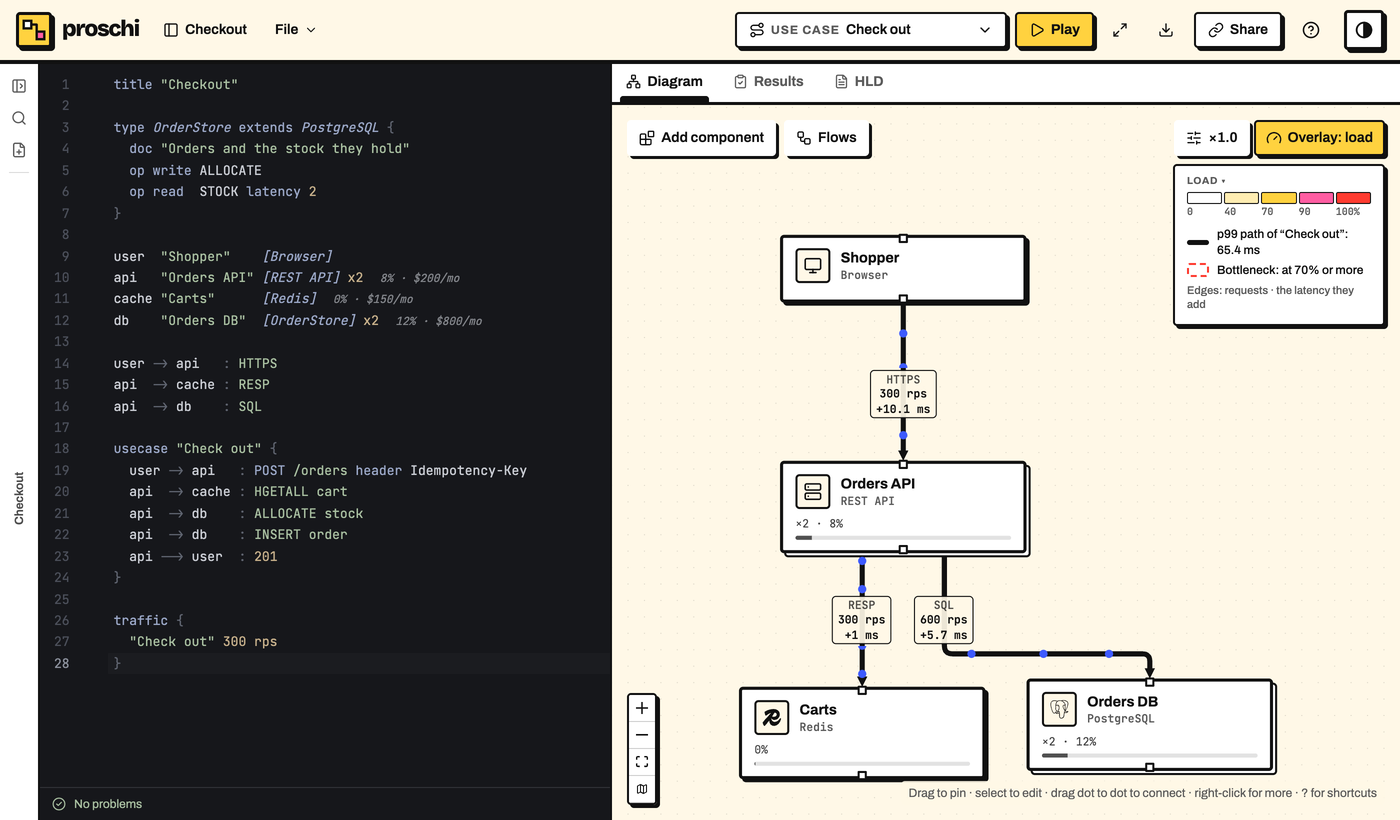
- Open the editor and paste the design below.
- Type
api -> db :in the use case. The list shows the operations ofOrderStore, its own and PostgreSQL's. - Change
ALLOCATE stocktopersist stockand read the warning. - Check any design from the command line:
npx proschi check checkout.proschititle "Checkout"
type OrderStore extends PostgreSQL {
doc "Orders and the stock they hold"
op write ALLOCATE
op read STOCK latency 2
}
user "Shopper" [Browser]
api "Orders API" [REST API] x2
cache "Carts" [Redis]
db "Orders DB" [OrderStore] x2
user -> api : HTTPS
api -> cache : RESP
api -> db : SQL
usecase "Check out" {
user -> api : POST /orders header Idempotency-Key
api -> cache : HGETALL cart
api -> db : ALLOCATE stock
api -> db : INSERT order
api --> user : 201
}
traffic {
"Check out" 300 rps
}OrderStore keeps the PostgreSQL icon, and ALLOCATE stock counts as a
write. Component types has the full syntax, and
typed assertions the new tests.
Who it is for #
Read this if your use cases name real calls (INSERT, GET /orders,
PUBLISH) and you want the simulation and the tests to trust them. If you
solve practice problems, expect strict checks: a made-up verb is now an
error there.
Some limits. A diagram that used free-text labels on databases or caches
gets warnings now; the steps still play, and each warning says how to fix
it. Read and write now come from the type, so a few Redis commands, such as
LPOP and ZINCRBY, now count as writes. Practice problems moved to
version 2, which restarts their leaderboards and stats.